Friday, November 19, 2010

Fort Macon

Parade Ground

Located on Bogue Banks near Atlantic Beach, the Fort Macon State Park park opened in 1936. Fort Macon State Park is the second most visited state park in North Carolina, with an annual visitation of 1.3 million, despite being the third smallest park in North Carolina with 389 acres.

Five-sided Fort Macon is constructed of brick and stone. It was named after North Carolina's eminent statesman of the period, Nathaniel Macon.

 View from the sally port

Looking through the main entrance known as the sally port. Directly ahead is the inner court known as the parade ground. On either side of the parade are vaulted rooms known as casemates.

Construction of the present fort began in 1826 and lasted eight years. The fort was completed in December, 1834.

Window looking out to the inner court.

The Civil War began on April 12, 1861, and only two days elapsed before local North Carolina militia forces from Beaufort arrived to seize the fort for the state of North Carolina and the Confederacy.

Great view of the inner wall construction

Fort Macon was designed by Brig. Gen. Simon Bernard and built by the US Army Corps of Engineers.

Casemate

Twenty-six vaulted rooms (also called casemates) are enclosed by outer walls that average 4 1/2 feet thick.

Ditch and Moat

The total cost of the fort was $463,790.

Civil War ration storage room

 Kitchen and Mess Hall 

The Fort Macon Flag

After seizing Fort Macon in April 1861, Confederate soldiers lacked a suitable Confederate flag. To solve the problem, they recycled the fort's old 20-foot by 36-foot U.S. garrison flag. The old "Stars and Stripes" was taken apart, then sewn back together to create the first national flag of the Confederacy. This flag, known as the "Stars and Bars," had three broad red-whit-red bars. Enough stars were left on the flag to represent the Confederate states; extra stars were simply cut out.


At the outbreak of World War II, the US Army leased the park from the state and actively manned the old fort with Coast Artillery troops to protect a number of important nearby facilities.


The fort was occupied from December, 1941, to November, 1944.


On October 1, 1946, the Army returned the fort and the park to the state.

Sage Advise.

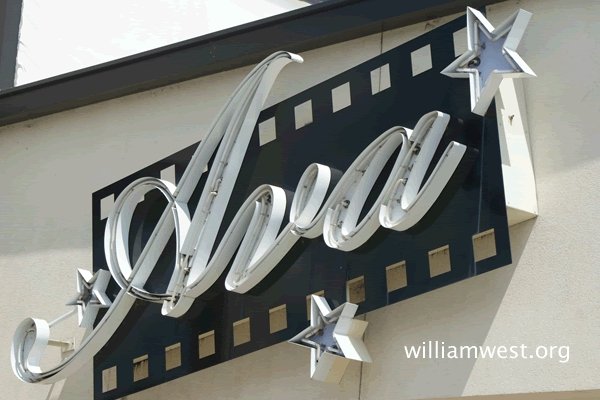
The Ava Gardner Museum


The Ava Gardner Museum is home to an extensive collection of Ava Gardner memorabilia. Each object in the museum was either owned by Ava Gardner or her family, used in her films or had a special meaning or relationship to Ava.

 
The glorious cape and 2 pairs of 33 shoes used in making the movie The Barefoot Contessa (1954).

This stunning silk satin cape, embroidered with gold thread and brass sequins, was worn by Ava in publicity shots for The Barefoot Contessa. However, the costume does not appear in the movie and may have been included in scenes that were deleted in the final cut of the film.

One of 23 pairs of shoes warn in The Barefoot Contessa (1954)

Ava's wardrobe for Contessa included 23 pairs of shoes. Cast in a role that most critics agree paralleled her private life, Ava played the character of Maria Vargas. As the film's title implies, both Ava and Maria preferred to forgo shoes whenever possible.

Black Dress worn in The Great Sinner (1949)

Within the Main Case of the Museum Gallery is a visitor favorite: the black dress Ava wore in The Great Sinner. Visitors often remark on the diminutive size of the dress and exclaim over her waist size – 18 inches.

Ava Gardner Museum

Ava Lavinia Gardner was born on Christmas Eve, 1922, in Grabtown, a rural community seven miles east of Smithfield, NC. She was the youngest of seven children of Jonas and Mary Elizabeth (Molly) Gardner. The town of Smithfield now has an Ava Gardner Museum.

A view of the Museum

In October 2000, the new Ava Gardner Museum opened its doors and has continued to draw national and even worldwide attention with approximately 12,000 visitors each year.

Bodice from The Great Sinner (1949)

Gown crafted from silk and wool gaberdine worn in The Naked Maja (1958)

Jacket worn in Mogambo (1953)

Harem (1986)

Harem (1986)

A pair of shoes from Harem (1986)

TV-miniseries Harem (1986)

Really cool pair of pumps!

Handbag

One of the many story boards of Ava's life.

I saw signs posted along I-95 for the museum and decided to take a chance. I have to tell you, it was a great way to spend the afternoon! 

Thursday, November 18, 2010

Nassau Botanical Garden

 The Nassau Botanical Garden was established on July, 10, 1973 on 18 acres and features over 600 species of shrubs and trees. 


The site was originally a rock quarry that supplied stones for roadways and the building of fort Charlotte but is now a quiet garden with trails, terraces, and grotto.


The gardens were damaged a few years back by a hurricane and is now in need of repair. One could tell it was a Grand place in the past. Although the gardens were closed to the public, two workers allowed me full access to the property. What luck!

A moss covered staircase

 Palms against a stormy sky

Banyan Tree

 Wooden Gate

One of the workers


 Terraced trails weave through the tropical garden.

There were many varieties of Palm trees that I have never seen before.

Tropical flowers
 
Staircase that empties onto the Grotto.

Wednesday, November 17, 2010

Ardastra Gardens

 Ardastra Gardens was first opened to the public in 1937. It was the brain child of Hedley Vivian Edwards, a Jamaican horticulturalist, who wanted to create a luscious garden here in the heart of Nassau.


This was not an easy task as the area in those days was more of a marshland than a lush garden. 


In the 1950’s flamingos in the Bahamas were nearly hunted to the point of extinction. The Government at that time brought flamingos to Ardastra Gardens as an experiment to try breeding them in captivity.


The flamingos were featured in the National Geographic magazine in the October 1957 issue as nobody had trained flamingos to be comfortable around people before and so people could come closer to the flamingos in Ardastra compared to anywhere else in the world.


Ringtailed Lemur

In 1982 the gardens were bought by Mr. Norman Solomon, a Bahamian, and it was then that the first zoo in the Bahamas was born.

Serval

The day I visited the zoo, I had the entire park to myself. I had the most wonderful time with each of the animals.

Military Macaw

Some of the animals were as facinated with me as I was with them.


Meer Kat

Molucan Cokatoo
These two were whispering secrets

Spectacled Caiman
This one thought I looked tasty!

San salvador rock iguana
The colors and textures on this lizard were amazing. He was quite large as well.

East African Crowned Crane

This little guy was not happy that I had gotten too close and had risen up and stomped his feet in distain. I really didn't know whether to run or take the pic.  The pic won.  The crane was no more than two feet from me when I captured this pic.

Black Swan

Black Swans were first seen by Europeans in 1697, when Willem de Vlamingh's expedition explored the Swan River, Western Australia. This one was quite aggressive. If you got to close he would try to bite.

Peacock

Many of the birds roamed the gardens. You can walk right up to many of the flamingos which was really quite surreal .